Fine-Tuning vs Prompt Engineering: What's the Best Way to Customize an LLM?
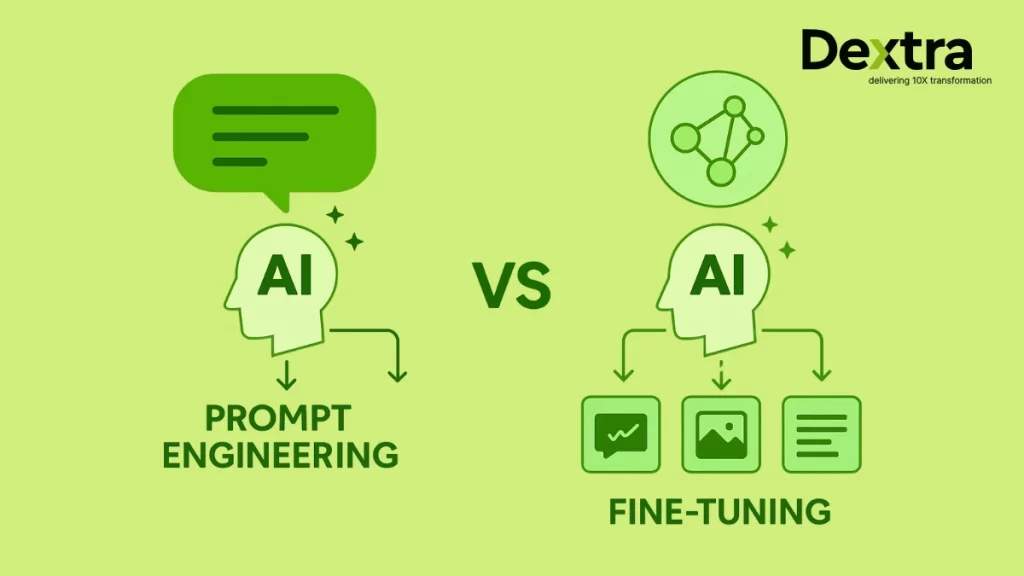
As the adoption of large language models (LLMs) grows, businesses and developers are looking for ways to tailor these models to meet specific needs. Two major approaches stand out: fine-tuning and prompt engineering. Each has its advantages and ideal use cases — but which is best for you?
What Is Prompt Engineering?
Prompt engineering involves crafting precise inputs (prompts) to guide the LLM’s output. For example, you can get different tones, formats, or styles just by changing how you phrase your question.
Pros:
No additional training required
Fast and cost-effective
Good for quick iterations and experimentation
Cons:
Requires trial and error
May not handle domain-specific tasks well
What Is Fine-Tuning?
Fine-tuning involves retraining a pre-trained LLM on a smaller, domain-specific dataset. This process requires computing resources and data preparation but results in a model that’s highly specialized.
Pros:
Tailored to specific domains
Better performance on repetitive or niche tasks
Cons:
Requires technical expertise
Costlier and time-consuming
Use Cases: When to Use Which
Prompt Engineering: Ideal for marketing copy, creative writing, customer support scripts, and general-purpose tasks.
Fine-Tuning: Best for medical research, legal document generation, enterprise knowledge base queries, and multilingual applications.
Hybrid Approach: The Best of Both Worlds
Some advanced use cases combine both. For instance, a fine-tuned model on legal texts might still require prompt engineering to handle tone and format variation.
Conclusion
Prompt engineering is perfect for fast and flexible experimentation, while fine-tuning excels in depth and specificity. The right choice depends on your goals, resources, and desired accuracy.